


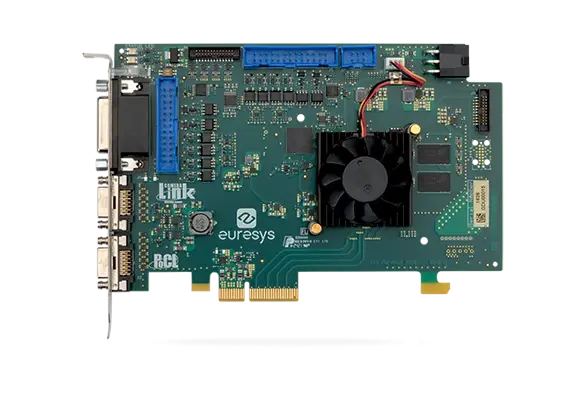
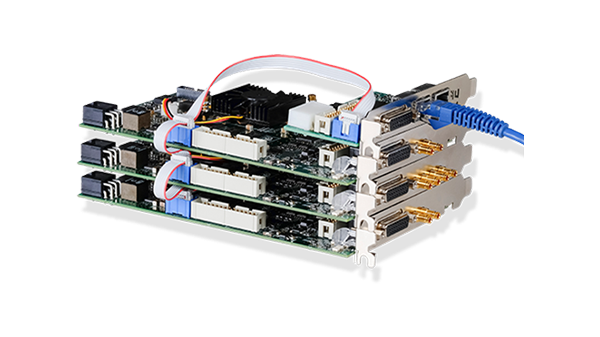
Grablink Duo
適用於一臺全規格或兩臺基本規格 Camera Link 攝影機的影像擷取卡
- 適用於兩台獨立的 Camera Link 基礎配置相機
- 適用於一台 Camera Link 基礎、中型、完整、72 位元或 80 位元相機
- 直接相容於市面上數百款 Camera Link 相機
- PoCL(Camera Link 供電)
- ECCO:擴展型 Camera Link 纜線長度
- PCIe Gen 2 x4 匯流排
- 具備 20 條功能豐富的數位 I/O 線路
- 支援 GenCP(通用控制協定)
- 相容於 eGrabber 驅動程式
- 相容於 Memento 事件記錄工具
ECCO:延長型 Camera Link 纜線操作
請使用更長的 Camera Link 纜線,最長可達 15 公尺!
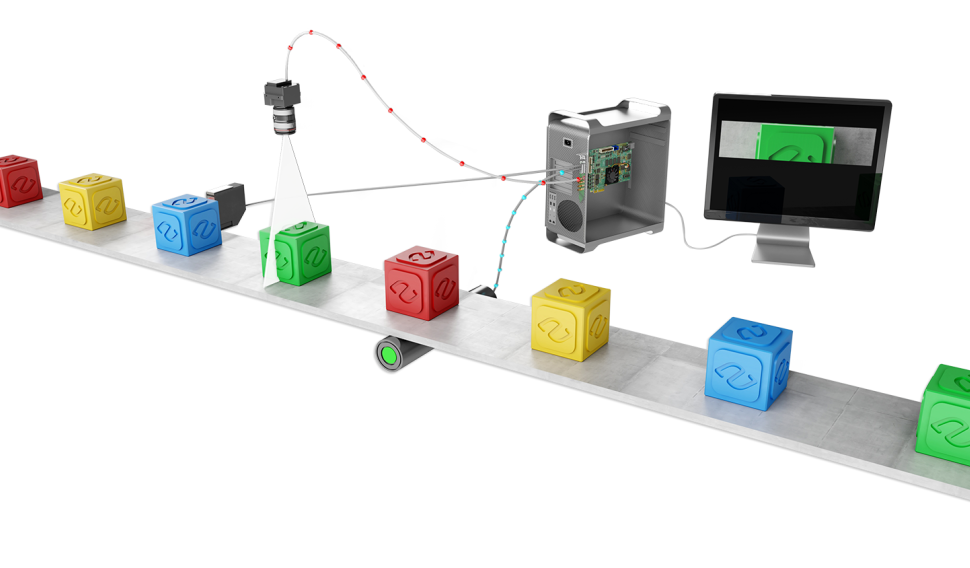
線掃描觸發功能
Allied Vision 的影像擷取卡具備多種功能,可同步線掃描或一維相機、感測器及照明控制器。影像擷取卡能根據從運動編碼器接收的訊號,控制相機的掃描速率。
它們支援連續卷材掃描(用於檢測無限長且持續移動的表面,且不會遺漏任何一條掃描線),以及離散物體掃描(用於擷取在相機前方移動的物體影像)。
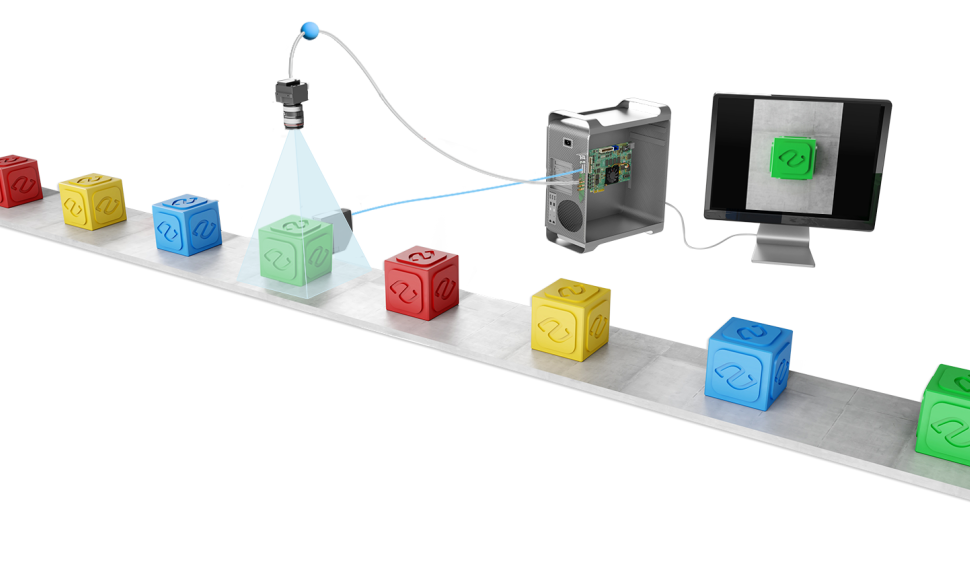
區域掃描觸發功能
Allied Vision 的影像擷取卡具備多種功能,可同步區域掃描或 2D 攝影機、感測器及照明控制器,適用於視野範圍內的靜止或移動物體,或移動中的攝影機。
好處
相容於 eGrabber
-
- eGrabber Studio:eGrabber 的互動式評估與示範應用程式,可存取由 GenTL Producers 提供的 GenICam 功能
- GenTL Console:一款命令列工具,可存取由 Euresys GenTL Producers 所提供的函式與指令

Memento 事件記錄工具
-
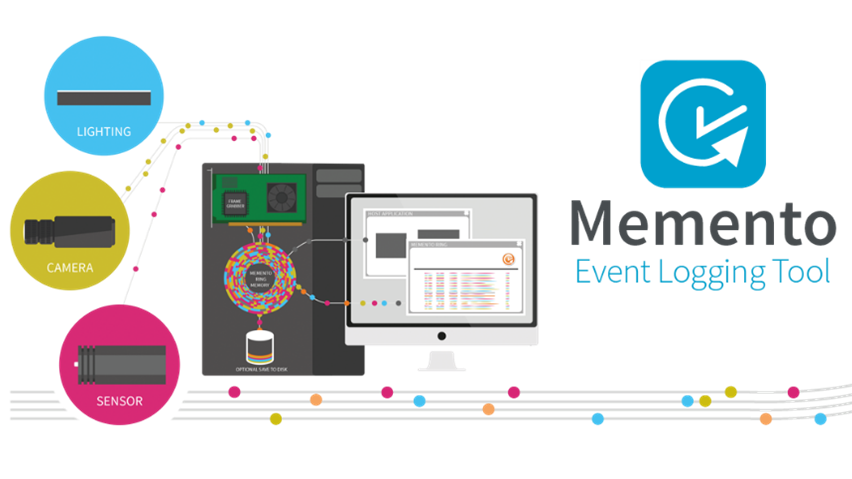
- Memento 是一款適用於 Coaxlink 與 Grablink 擷取卡的高階開發與除錯工具。
- Memento 會精確記錄所有與攝影機、擷取卡及其驅動程式以及應用程式相關的事件日誌。
- 它為開發人員提供精確的時間軸事件記錄,包含時間戳記、上下文資訊及邏輯分析器檢視。
- 無論在應用程式開發、除錯階段或機器運作期間,皆能提供極具價值的輔助功能。
C2C-Link 攝影機同步
允許精確同步多個連接至同一張卡的區域掃描或線掃描相機
-
- 至同一張卡
- 與同一台電腦中的不同卡
- 至不同電腦中的不同卡

高效能 DMA(直接記憶體存取)
-
- 直接轉移至使用者分配的記憶體
- 硬體散射-聚合支援
Windows、Linux 與 macOS 驅動程式皆可使用
包含對 Intel 64 位元平台以及 ARM 64 位元平台的支援。

通用輸入輸出線
-
- 相容於多種感測器與運動編碼器。
- 高速差動輸入:支援最高 5 MHz 的正交運動編碼器。
- 隔離式電流感測輸入:支援 5V、12V、24V 信號電壓,最高 50 kHz,個別電氣隔離能力達 250VDC 及 170VAC 有效值。
- 隔離式接觸輸出。
- 高速 5V 相容 TTL 輸入/ LVTTL 輸出。
靈活的線掃描相機操作與速率轉換器
-
- 速率轉換器是一款智慧型、可編程的頻率倍增器/分頻器。
- 搭配運動編碼器與線掃描相機使用時,可讓使用者選擇影像中像素的長寬比例。
- 它提供了一種校準擷取鏈的方法,可輕鬆實現正方形(1:1 寬高比)像素。
線掃描元數據插入
啟用此功能時,系統將同步記錄影像資料外的元數據。每擷取一條影像線時,皆會捕捉該線的元數據;而緩衝區元數據僅在擷取緩衝區首條影像線時進行捕捉。元數據由可配置的通用事件計數器、正交編碼器位置計數器及/或I/O線狀態組合而成。此功能使線掃描應用能將影像資料與系統事件(包括運動編碼器位置)建立關聯。
eGrabber
探索我們的幀擷取軟體

General
| Product name: | PC1628 Grablink Duo |
| Product code: | 1628 |
| Product status: | Released |
Mechanical
| Form factor: | PCI Express card |
| Format: | Standard profile, half length, 4-lane PCI Express card |
| Cooling method: | Air cooling, fan-cooled heatsink |
| Mounting: | For insertion in a standard height, 4-lane or higher, PCI Express card slot |
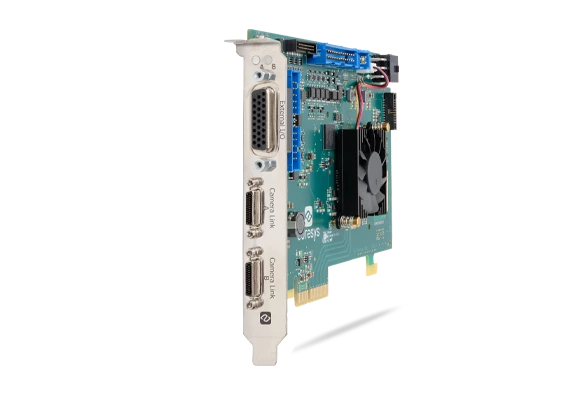
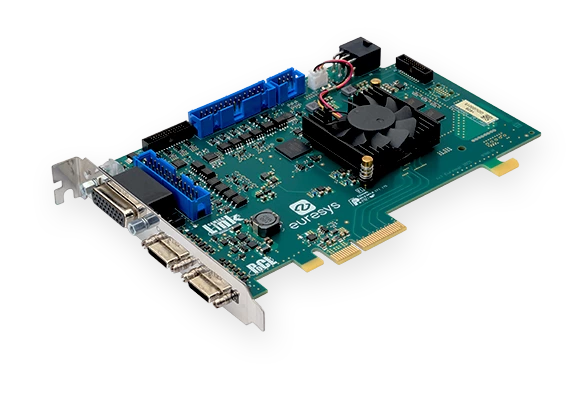
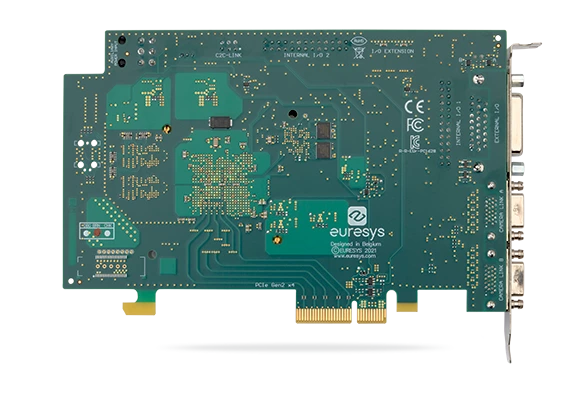
| Connectors: | 'A' on card bracket: 26-position Shrunk Delta Ribbon (SDR) socket with M2 jack socket screws Camera Link camera A input, PoCL output 'B' on card bracket: 26-position Shrunk Delta Ribbon (SDR) socket with M2 jack socket screws Camera Link camera B input or camera A second cable input, PoCL output 'EXTERNAL I/O' on card bracket: 26-pin 3-row high-density D-Sub female socket with UNC4-40 jack socket screws I/O lines and I/O power output 'INTERNAL I/O 1' on printed circuit board: 26-pin 2-row 0.1" pitch pin header with shrouding I/O lines and I/O power output 'INTERNAL I/O 2' on printed circuit board: 26-pin 2-row 0.1" pitch pin header with shrouding I/O lines and I/O power output 'I/O EXTENSION' on printed circuit board: 26-pin 2-row 0.05" pitch pin header with shrouding I/O extension cable socket 'C2C-LINK' on printed circuit board: 6-pin 2-row 0.1" pitch pin header with shrouding Card-to-card link 'AUXILIARY POWER INPUT' on printed circuit board: 6-pin PEG power socket 12 V DC power input for PoCL and I/O power output |
| LED indicators: | 'A', 'B' on bracket: Bi-color red/green LEDs Camera Link status indicator |
| Switches: | 'RECOVERY' on PCB: 3-pin 1-row 0.1" header or 2-way DIP switch Firmware emergency recovery |
| Dimensions: | PCB L x H: 167.65 mm x 111.15 mm [6.6 in x 4.38 in] |
| Weight: | Net weight: 167 g [5.9 oz] Gross weight: 272 g [9.6 oz] |
Host Bus
| Standard: | PCI Express 2.0 |
| Link width: | 4 lanes 1 lane or 2 lanes with reduced performance |
| Link speed: | 5.0 GT/s (PCIe 2.0) 2.5 GT/s (PCIe 1.0) with reduced performance |
| Maximum payload size: | 512 bytes |
| Peak delivery bandwidth: | 2,000 MB/s |
| Effective (sustained) delivery bandwidth: | 1,700 MB/s (Host PC motherboard dependent) |
| Power consumption: | Typ. 7.1 W ( 2.7 W @ +3.3V, 4.4 W @ +12V), excluding camera and I/O power output |
Camera Inputs
| Camera interface standard: | Camera Link |
| Interface standard(s): | Camera Link 2.0 |
| Maximum link speed: | 85 MHz |
| Camera powering: | PoCL |
| Connectors: | Two Shrunk Delta Ribbon (SDR) Miniature Camera Link (MiniCL) |
| ECCO - Extended Camera Link Cable Operation: | ECCO |
| Number of cameras: | One 80-bit / 72-bit / Full / Medium / Base configuration camera Or two Base configuration cameras |
| Maximum number of cameras: | 2 |
| Line-scan cameras supported: | Yes |
| Maximum aggregated camera data transfer rate: | 6.8 Gbps (850 MB/s) |
| Camera Link configuration: | Base, Medium, Full, 72-bit, 80-bit |
| Camera Link clock frequency: | From 20 MHz up to 85 MHz |
| PoCL (Power over Camera Link): | PoCL Safe Power: Two independent controllers PoCL Device detection and automatic power-on Overload and short-circuit protection A +12V power source must be connected to the AUXILIARY POWER INPUT connector using a 6-pin PEG cable |
| Camera types: | Area-scan cameras: Grayscale and color (RGB and Bayer CFA) Line-scan cameras: Grayscale and color RGB |
| Camera pixel formats supported: | Mono8, Mono10, Mono12, Mono14, Mono16 BayerXX8, BayerXX10, BayerXX12, BayerXX16 where XX = GR, RG, GB, or BG RGB8 NOTE: Refer to release notes for availability of BayerXX14, RGB10, RGB12, RGB14 and RGB16 formats |
Area Scan Camera Control
| Trigger: | Precise control of asynchronous reset cameras, with exposure control. Support of camera exposure/readout overlap. Support of external hardware trigger, with optional delay and trigger decimation. |
| Strobe: | Accurate control of the strobe position for strobed light sources. Support of early and late strobe pulses. |
Line Scan Camera Control
| Scan/page trigger: | Precise control of start-of-scan and end-of-scan triggers. Support of external hardware trigger, with optional delay. Support of infinite acquisition, without missing line, for web inspection applications. |
| Line trigger: | Support for quadrature motion encoders, with programmable noise filters, selection of acquisition direction and backward motion compensation. Rate Converter tool for fine control of the pixel aspect ratio: Rate Conversion Ratio in the range 0.001 to 1000 with an accuracy better than 0.1%. Rate Divider tool |
| Line strobe: | Accurate control of the strobe position for strobed light sources. |
On-Board Processing
| On-board memory: | 512 MB |
| Image data stream processing: | Unpacking of 10-/12-/14-bit to 16-bit with selectable justification to LSb or MSb |
| Input LUT (Lookup Table): | Monochrome 8-bit to 8-bit transformation Monochrome 10-bit to 8-, 10- or 16-bit transformations Monochrome 12-bit to 8-, 12- or 16-bit transformations |
| Bayer CFA to RGB decoder: | Advanced interpolation method using average and median functions on a 3x3 kernel |
| Data stream statistics: | Measurement of: Frame rate (Area-scan only) Line rate Data rate Configurable averaging interval |
| Event signaling and counting: | The application software can be notified of the occurrence of various events: Standard event: the EVENT_NEW_BUFFER event notifies the application of newly filled buffers A large set of custom events Custom events sources: I/O Toolbox events Camera and Illumination control events Each custom event is associated with a 32-bit counter that counts the number of occurrences The last three 32-bit context data words of the event context data can be configured with event-specific context data: Event-specific data State of all System I/O lines sampled at the event occurrence time Value of any event counter |
General Purpose I/O
| Number of lines: | 20 I/O lines: 4 differential inputs (DIN) 4 singled-ended TTL inputs/outputs (TTLIO) 8 isolated inputs (IIN) 4 isolated outputs (IOUT) NOTE: The number of I/O lines can be extended using I/O modules attached to the I/O EXTENSION connector. |
| Usage: | Any I/O input lines can be used by any LIN tool of the I/O Toolbox Selected pairs of I/O input lines can be used by any QDC tool of the I/O toolbox to decode A/B signals of a motion encoder |
| Electrical specifications: | DIN: High-speed differential inputs, up to 5 MHz, compatible with ANSI/EIA/TIA-422/485 differential line drivers and complementary TTL drivers TTLIO: High-speed 5V-compliant TTL inputs or LVTTL outputs, compatible with totem-pole LVTTL, TTL, 5V CMOS drivers or LVTTL, TTL, 3V CMOS receivers IIN: 200 kHz isolated current-sense input with wide voltage input range up to 30V, compatible with totem-pole (push-pull) HTL drivers, 5V TTL/RS-422 differential line drivers, 5V CMOS drivers, potential free contacts, solid-state relays and opto-couplers IOUT: Isolated contact outputs compatible with 30V / 100mA loads NOTE: IIN and IOUT lines provide a functional isolation grade for the circuit technical protection. It does not provide an isolation that can protect a human being from electrical shock! |
| Filter control: | Glitch removal filter available on all System I/O input lines Configurable filter delay: Custom value Fixed values for DIN and TTLIO lines: 50 ns, 100 ns, 200 ns, 500 ns, 1 µs Fixed values for IIN lines: 500 ns, 1 µs, 2 µs, 5 µs, 10 µs |
| Polarity control: | Yes |
| Power output: | Non-isolated, +12V, 1A, with electronic fuse protection |
| I/O Toolbox tools: | The I/O Toolbox is a configurable interconnection of tools that generates events (usually triggers): Line Input tool (LIN): edge detector delivering events on rising or falling edges of any selected input line. Quadrature Decoder tool (QDC): a composite tool including: A quadrature edge detector delivering events on selected transitions of selected pairs of input lines. An optional backward motion compensator for clean line-scan image acquisition when the motion is unstable. A 32-bit up/down counter for delivering a position value. User Actions Scheduler tool (UAS): to delegate the execution of 'User Actions' at a scheduled time or encoder position. Possible user actions include setting low/high/toggle any bit of the User Output Register or generation of any User Events. Delay tool (DEL): to delay up to 16 events from one or two I/O toolbox event sources, by a programmable time or number of motion encoder ticks (any QDC events). Divider tool (DIV): to generate an event every nth input events from any I/O toolbox event source. Multiplier/divider tool (MDV): to generate m events every d input events from any I/O toolbox event source. The 'Input Tools' (LIN, QDC and UAS) can be further processed by the 'Event Tools' (DEL, DIV and MDV) to generate any of the following "trigger" events: The "cycle trigger" of the Camera and Illumination controller The "cycle sequence trigger" of the Camera and Illumination controller The "start-of-scan trigger" of the Acquisition Controller (line-scan only) The "end-of-scan trigger" of the Acquisition Controller (line-scan only) |
| I/O Toolbox composition: | Determined by the selected firmware variant: '1-camera': 8 LIN, 1 QDC, 1 UAS, 2 DEL, 1 DIV, 1 MDV, 2 C2C '2-camera': 8 LIN, 2 QDC, 1 UAS, 2 DEL, 2 DIV, 2 MDV, 2 C2C '1-camera, line-scan': 8 LIN, 1 QDC, 1 UAS, 2 DEL, 1 DIV, 1 MDV, 3 C2C '2-camera, line-scan': 8 LIN, 2 QDC, 1 UAS, 2 DEL, 2 DIV, 2 MDV, 3 C2C |
C2C Link
| Description: | Accurate synchronization of the trigger and the start-of-exposure of multiple grabber-controlled area-scan cameras. Accurate synchronization of the start-of-cycle, start-of-scan and end-of-scan of multiple grabber-controlled line-scan cameras. |
| Specification: | C2C-Link synchronizes cameras connected to: the same card to different cards in the same PC (requires an accessory cable such as the "3303 C2C-Link Ribbon Cable" or a custom-made C2C-Link cable) to different cards in different PCs (requires one "1636 InterPC C2C-Link Adapter" for each PC and one RJ 45 CAT 5 STP straight LAN cable for each adapter but the last one) Maximum distance: 120 cm inside a PC 1200 m cumulated adapter to adapter cable length Maximum trigger rate: 2.5 MHz for configurations using a single PC, or up to 10 PCs and 100 m total C2C-Link cable length 200 kHz for configurations up to 32 PCs and 1200m total C2C-Link cable length Trigger propagation delay from master to slave devices: Less than 10 ns for cameras on the same card or on different cards in the same PC Less than 265 ns for cameras on different cards in different PCs (3 PCs and 40m total C2C-Link cable length) |
Software
| Driver name: | eGrabber |
| First release: | eGrabber 23.02 |
| Current release: | eGrabber 25.12 |
| Host PC Operating System: | Microsoft Windows 11, 10 for x86-64 (64-bit) processor architecture Linux for x86-64 (64-bit) and AArch64 (64-bit) processor architectures macOS for x86-64 (64-bit) and AArch64 (64-bit) processor architectures |
| APIs: | EGrabber class, with C++ and .NET APIs: .NET assembly designed to be used with development environments compatible with .NET frameworks version 4.6 or higher GenICam GenTL producer libraries compatible with C/C++ compilers: 'x86_64' dynamic library designed to be used with ISO-compliant C/C++ compilers for the development of x86-64 (64-bit) applications 'aarch64' dynamic library designed to be used with ISO-compliant C/C++ compilers for the development of AArch64 (64-bit) applications |
| Memento supported: | Yes |
Environmental
| Operating ambient air temperature: | 0°C to +50°C / +32°F to +122°F |
| Operating ambient air humidity: | 10% to 90% RH non-condensing |
| Storage ambient air temperature: | -20°C to +70°C/ -4°F to +158°F |
| Storage ambient air humidity: | 10% to 90% RH non-condensing |
Certifications
| EMC standards: | European Council EMC Directive 2014/30/EU United States FCC CFR Title 47 Part 15B |
| EMC - Emission: | EN 55032:2015 / CISPR 32:2012 Class B FCC CFR Title 47 Part 15B Class B |
| EMC - Immunity: | EN 55035:2017 / CISPR 35:2016 EN 61000-6-2:2005 / IEC 61000-6-2:2016 EN 61000-4-2:2009 EN 61000-4-3:2006 EN 61000-4-4:2004 EN 61000-4-6:2014 |
| KC Certification: | Korean Radio Waves Act, Article 58-2, Clause 3 |
| Flammability: | PCB compliant with UL 94 V-0 |
| RoHS: | European Union Directive 2015/863 (ROHS3) |
| REACH: | European Union Regulation 1907/2006 |
| WEEE: | Must be disposed of separately from normal household waste and must be recycled according to local regulations |