



易点检测器
先进表面检测技术——适用于电池、造纸、薄膜及玻璃行业
- 检测微弱缺陷与污染物,即使在噪声图像中亦可实现
- 高速处理支持在线检测
- 兼容线扫相机与2D相机的图像采集
- 可选功能:在工件边缘预对齐感兴趣区域
- 可选功能:基于深度学习的缺陷分类
- 提供简洁全面的C++、C#及Python接口
描述
在线表面检测的实时处理
凭借其两阶段处理方法,EasySpotDetector比其他基于深度学习的物体分割处理更快速。在搭载英特尔i7-10850H处理器的计算机上,EasySpotDetector每秒可处理高达2亿像素(仅检测功能)。分类功能可通过GPU运算提升性能,同时得益于OpenVINO,该功能也针对CPU运行进行了优化。
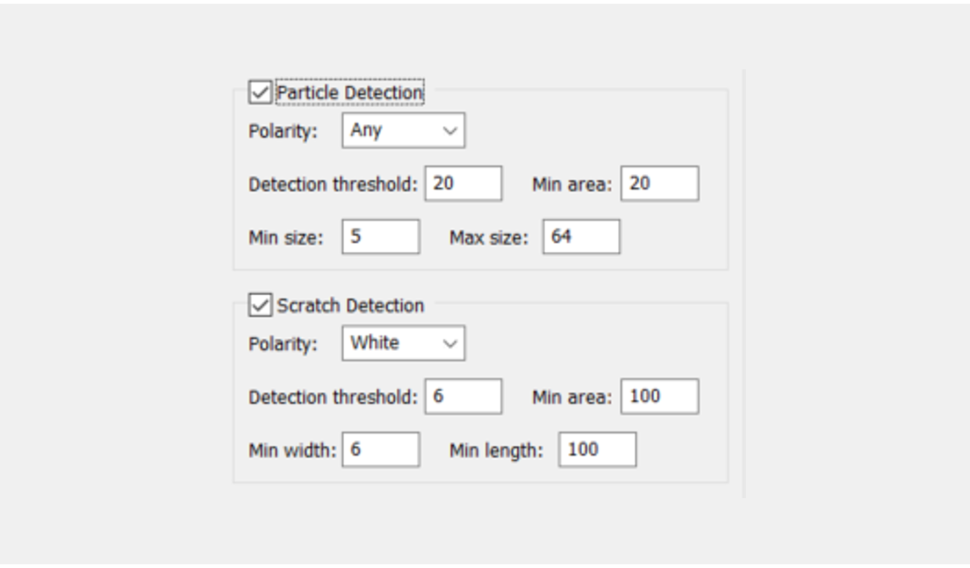
用于控制缺陷分割的参数集
一组明确的参数可让用户针对特定缺陷进行定位。用户可调整缺陷的类型(颗粒、划痕等)、外观(更亮、更暗或两者兼有)、尺寸以及最小对比度(强或弱缺陷)。
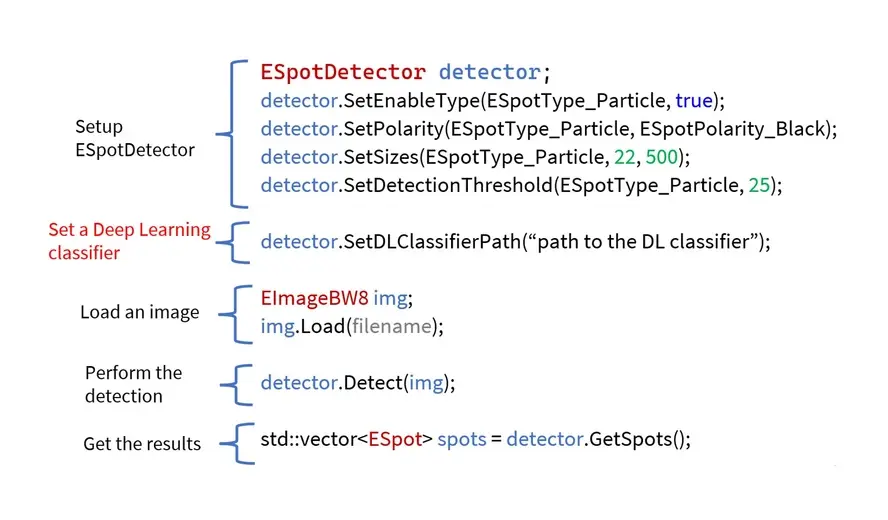
简单而全面的API
EasySpotDetector提供单一API接口,用于感兴趣区域(ROI)的对齐、表面缺陷检测以及基于定制训练的深度学习分类器的缺陷分类。
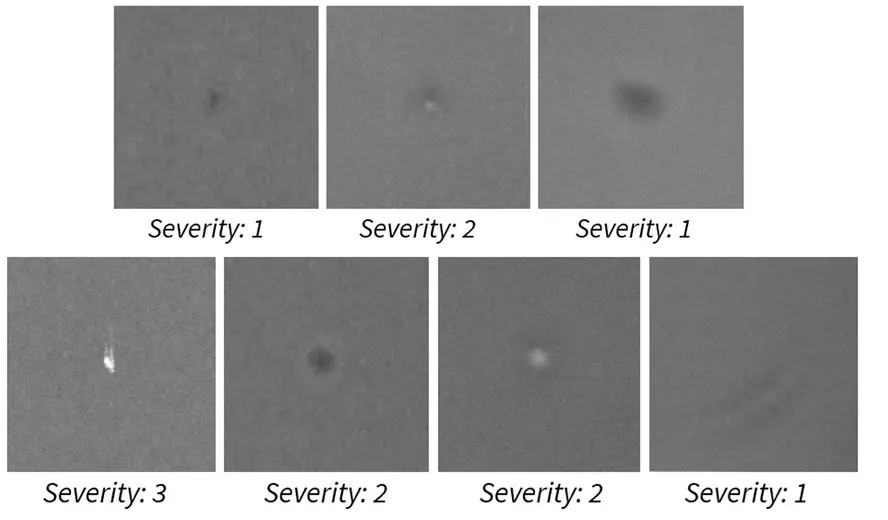
定制训练的深度学习目标分类器
检测到的对象可提交至深度学习分类器。该分类器由用户通过用户友好的深度学习工作室针对其特定应用进行训练。分类器的潜在用途包括:
- 确认或否定检测到的候选对象。
- 评估缺陷的严重程度等级。
- 根据外观特征将检测对象划分为多个类别。

已在多种使用场景下测试
EasySpotDetector已在多个表面检测应用中成功通过测试,包括:电池箔、织物、钢材、无源电子元件以及天然材料(例如:皮革、木材)。
易点检测器 示意图
New Open eVision Studio
复杂的图像处理序列可通过图形界面进行设计。该工具集充分展现了Open eVision库的多样性与强大功能。对应处理管道的C++、Python和C#源代码将自动生成,并提供Open eVision API的交互式文档。New Open eVision Studio可处理实时图像源,例如千兆网Vision相机、Coaxlink图像采集卡或eGrabber录像序列。
本应用免费提供,支持Windows与Linux系统,兼容英特尔及ARM 64位架构。


Software
- Host PC Operating System
-
Supported operating systems:
Microsoft Windows 11, 10 for x86-64 (64-bit) processor architecture
Microsoft Windows 11, 10 IoT Enterprise for x86-64 systems
Linux for x86-64 (64-bit) and ARMv8-A (64-bit) processor architectures with a glibc version greater or equal to 2.18
Minimum requirements:
8 GB RAM
Optional NVidia GPU
- APIs
-
Supported programming languages :
The Open eVision libraries and tools support C++, Python and the programming languages compatible with the .NET (C#, VB.NET)
C++ requirements: A compiler compatible with the C++ 11 standard is required to use Open eVision
Python requirements: Python 3.11 or later is required to use the Python bindings for Open eVision
.NET requirements: .NET framework 4.8 (or later) or the .NET platform 6.0 (or later) are supported
Supported Integrated Development Environments:
Microsoft Visual Studio 2017 (C++, C#, VB .NET, C++/CLI)
Microsoft Visual Studio 2019 (C++, C#, VB .NET, C++/CLI)
Microsoft Visual Studio 2022 (C++, C#, VB .NET, C++/CLI)
QtCreator 4.15 with Qt 5.12
- Input
-
Image source:
Any 8-bit grey scale image, no size limit
Region of interest:
Explicit or automatic selection of the region of interest (an oriented rectangle is fitted to the part’s edges)
- Output
-
A list of detected spots with their type (particle or scratch), position and size, strength, and pixel level segmentation map
Optionally, if a deep learning classifier is loaded, a class and a probability is set for each spot. The deep learning classifier is a trained EasyClassify tool.
Display functions are provided to draw the spot bounding boxes and segmented pixel
- Performance
-
Processing speed on single core Intel i7-10850H:
Particle detection only: 200 MPixels/s
Particle and scratch: 60 MPixels/s
- Requirements
-
Minimum defect size:
2x2 pixels
No maximum defect size
Ordering Information
- Product status
-
Released
- Product code - Description
-
PC4190 Open EasySpotDetector for USB dongle
PC4340 Open eVision EasySpotDetector
- Related products
-
PC6512 eVision/Open eVision USB Dongle (empty)
PC6514 Neo USB Dongle (empty)

