


EasyDeepOCR
基于深度学习的光学字符识别库
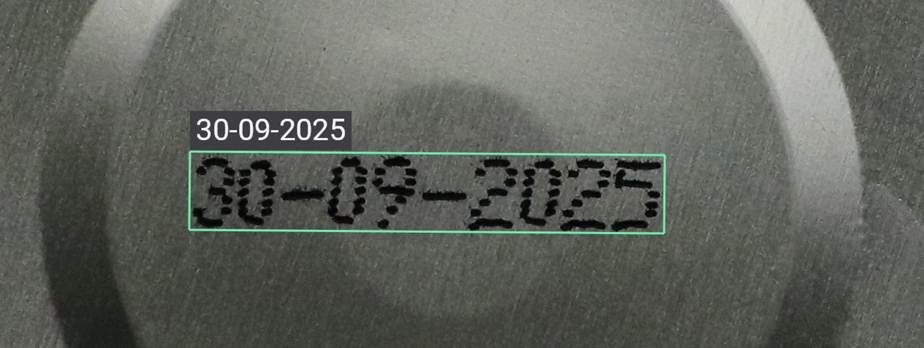
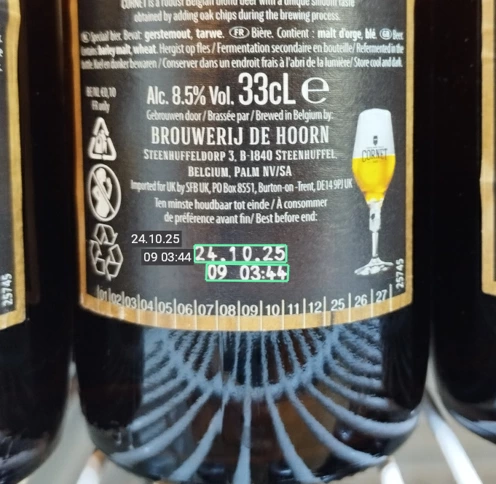
- 专为工业标记(如序列号、有效期、零件号等)设计的工具
- 操作极其简便,API 简单易用,无需培训
- 可选拓扑定义功能,用于过滤无关文本
- 专注于文本读取能力,同时不牺牲处理速度
- 通过专项训练提升文本检测与识别精度
- 支持在 CPU 和 GPU 以及 Intel 和 ARM 平台上运行
描述
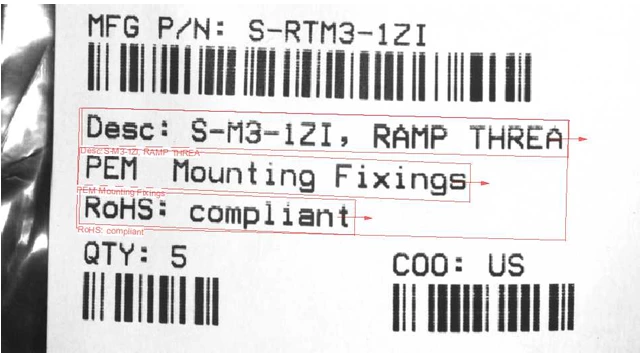
EasyDeepOCR 是一款基于深度学习技术的新一代 OCR 库,旨在解决当今文本识别领域面临的挑战。图像中文本的检测和字符的识别均实现全自动化。借助文本拓扑结构,可以减少字符识别中的歧义,并过滤掉无关文本。 只需少量样本即可完成的优化过程,能够显著加快处理速度。EasyDeepOCR 相较于 EasyOCR 和 EasyOCR2 库实现了重大改进,既保持了易用性,又增强了功能。
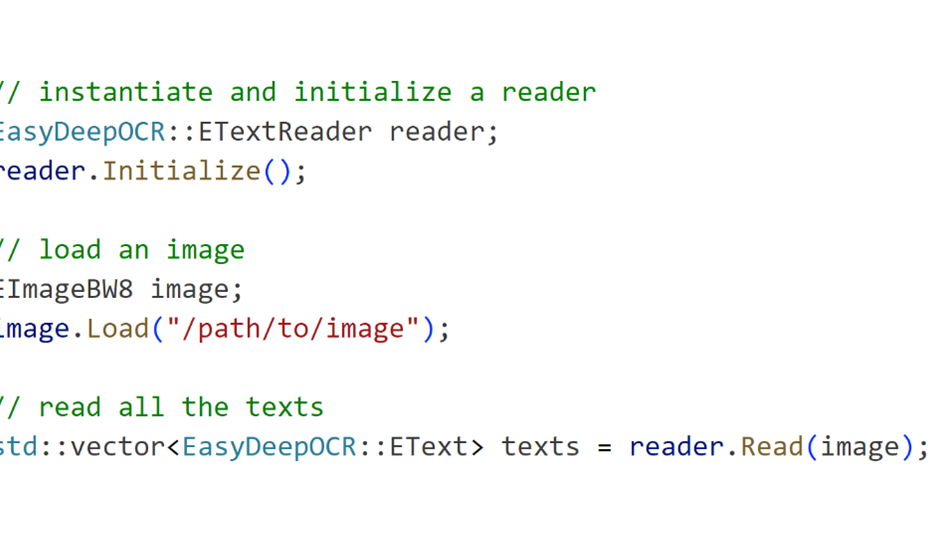
API 简单,效果却令人印象深刻
只需一次“读取”调用,图像中的所有文本就会被检测并读取出来。无需再进行复杂的配置。
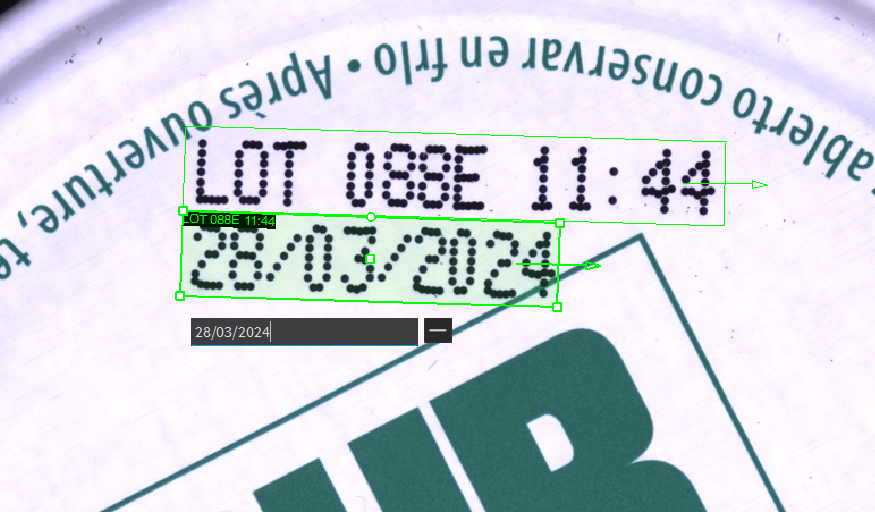
通过重新训练对文本检测和识别进行微调
用户可以对 EasyDeepOCR 文字检测和识别功能背后的神经网络进行重新训练。Deep Learning Studio 中提供了一个专门的项目类型,为文本标注和训练运行提供了高效的界面。只需 5 张图片,您就能在复杂的应用场景中获得显著的改进。
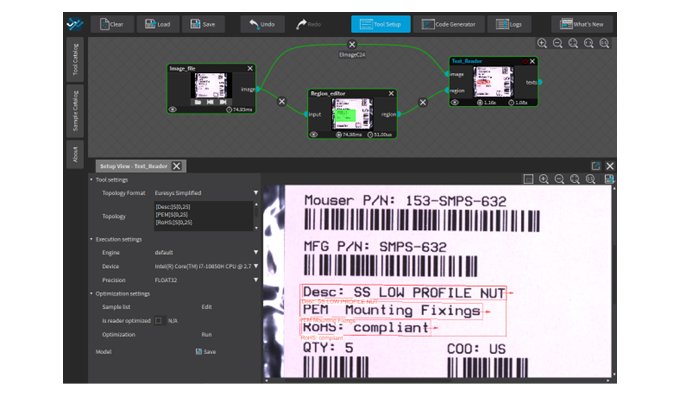
功能齐全的 eVision Studio 工具
eVision Studio 中的 EasyDeepOCR 工具提供了该库的所有功能。用户可以选择拓扑结构,并对一些样本图像进行标注,以实现管道优化。该工具还提供了深度学习执行设置,用户可在不同的设备(CPU、GPU)和引擎(OpenVINO、TensorRT 等)之间进行选择。
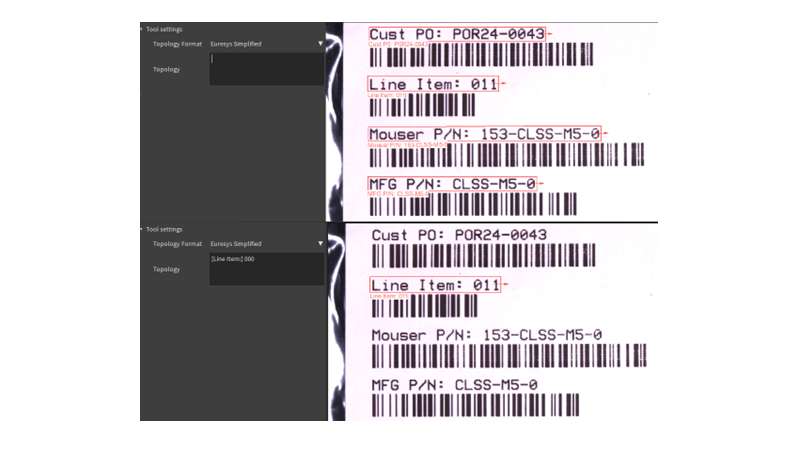
拓扑学定义:聚焦于正确的文本
拓扑结构定义了目标文本的格式。在工业标记领域,拓扑结构具有极高的实用价值,可重点呈现有效期、零件编号或其他格式要求严格的文本。通过定义拓扑结构,用户不仅能获取所需文本,还能通过减少歧义来提升字符识别精度。
在CPU(英特尔OpenVINO)和GPU(英伟达TensorRT)上表现优异
EasyDeepOCR已针对英特尔和ARM处理器(得益于OpenVINO)以及NVIDIA显卡(得益于TensorRT)进行了优化。

eVision Studio
可以通过图形界面设计复杂的图像处理流程。这一系列工具体现了 eVision 库的多样性和强大功能。 与处理管道对应的 C++、Python 和 C# 源代码会自动生成,并为 eVision API 提供交互式文档。eVision Studio 可以处理实时图像源,例如千兆网 Vision 相机、Coaxlink 图像采集卡或 eGrabber 记录仪序列。
该应用程序免费提供,可在 Windows、Linux 系统上运行,并兼容 Intel 和 ARM 64 位架构。


Software
- Host PC Operating System
-
eVision is a set of 64-bit libraries that require an Intel compatible processor with the SSE4 instruction set or an ARMv8-A compatible processor.
eVision can be used on the following operating systems:
Microsoft Windows 11, 10 for x86-64 (64-bit) processor architecture
Microsoft Windows 11, 10 IoT Enterprise for x86-64 systems
Linux for x86-64 (64-bit) and ARMv8-A (64-bit) processor architectures with a glibc version greater or equal to 2.18
Remote connections
Remote connections are allowed using remote desktop, TeamViewer or any other similar software.
Virtual machines
Virtual machines are supported. Microsoft Hyper-V, Oracle VirtualBox and libvirt hypervisors have been successfully tested.
Only the Neo Licensing System is compatible with virtualization.
Minimum requirements:
2 GB RAM to run an eVision application
8 GB RAM to compile an eVision application
Between 100 MB and 2 GB free hard disk space for libraries, depending on selected options.
- APIs
-
Supported programming languages :
The eVision libraries and tools support C++, Python and the programming languages compatible with the .NET (C#, VB.NET)
C++ requirements: A compiler compatible with the C++ 11 standard is required to use eVision
Python requirements: Python 3.11 or later is required to use the Python bindings for eVision
.NET requirements: .NET framework 4.8 (or later) or the .NET platform 6.0 (or later) are supported
Supported Integrated Development Environments:
Microsoft Visual Studio 2017 (C++, C#, VB .NET, C++/CLI)
Microsoft Visual Studio 2019 (C++, C#, VB .NET, C++/CLI)
Microsoft Visual Studio 2022 (C++, C#, VB .NET, C++/CLI)
QtCreator 4.15 with Qt 5.12
- Input
-
Monochrome and color images
Minimum text height: 12 pixels
Text line maximum aspect ratio: 20
Number of text lines in image: unlimited
Ordering Information
- Product status
-
Released
- Product code - Description
-
PC4191 Open EasyDeepOCR for USB dongle
PC4341 Open eVision EasyDeepOCR
- Related products
-
PC6512 eVision/Open eVision USB Dongle (empty)
PC6514 Neo USB Dongle (empty)

